
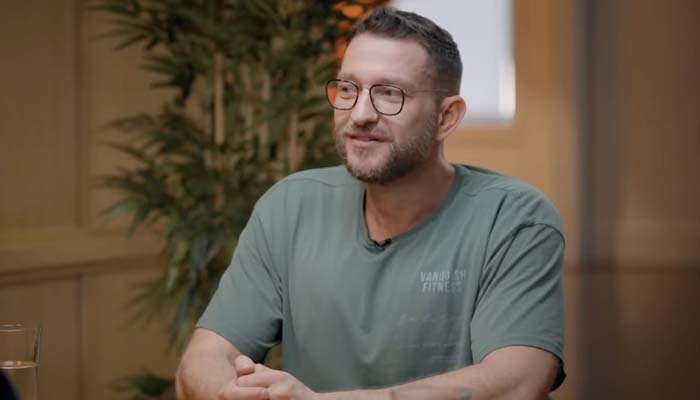
About Peter Steinberger
Peter Steinberger is an Austrian developer who joined OpenAI in February 2026 to drive the next generation of personal agents. As Sam Altman put it: "He is a genius with a lot of amazing ideas about the future of very smart agents interacting with each other to do very useful things for people. We expect this will quickly become core to our product offerings."
Before OpenAI, Steinberger built PSPDFKit — the PDF framework used on over a billion devices — and ran the company for 13 years. After burning out and selling his shares, he disappeared from tech for three years. He returned in 2024, skipped past earlier AI tools entirely, and landed directly on Claude Code — becoming one of the most vocal practitioners of "agentic engineering." His open-source AI agent OpenClaw (formerly Moltbot/Claudebot) amassed 180,000+ GitHub stars and became a reference point for autonomous AI agents.
His stated mission at OpenAI: building "an agent that even my mum can use" — requiring advanced models, safety, and deeply personal context.
Career Highlights
- OpenAI (2026-present): Driving next-generation personal agents; OpenClaw transitioning to an independent foundation with OpenAI sponsorship
- OpenClaw / Moltbot (2024-2026): Creator of the viral open-source AI agent (180K+ GitHub stars)
- PSPDFKit (2011-2024): Founder and CEO, PDF SDK on 1B+ devices
- iOS Development (2009-2011): Early App Store developer, mobile freelancer
Notable Positions
On the "Closing the Loop" Principle
Steinberger's central thesis is that AI coding success depends entirely on feedback loops:
"The good thing about how to be effective with coding agents is always: you have to close the loop. It needs to be able to debug and test itself. That's the big secret."
This explains why AI excels at coding but struggles with creative tasks—code can be compiled, linted, tested, and verified. The agent can learn from its own failures.
On Architecture Over Implementation
Rather than reading generated code line-by-line, Steinberger focuses on system design:
"I very much care about how the product feels, but how the plumbing works underneath—I care structurally, but not to the biggest detail."
He runs 5-10 Codex agents in parallel, designing systems while they implement.
On PRs Becoming "Prompt Requests"
"I read the prompts more than I read the code because this gives me more idea about the output. The work is the thinking about how it should work and what the details are."
Key Quotes
- "It's the same economics as a casino. You press the trigger—it does crap or it blows your mind."
- "Code reviews are dead. PRs should be called prompt requests."
- "I could run a company with 30% of the people. This requires redefining how the company works."
- "I've never worked harder than I do now. Not because I have to, but because it's so addictive."
OpenClaw (formerly Moltbot)
OpenClaw — originally launched as Claudebot, then renamed Moltbot, and finally OpenClaw — is Steinberger's open-source AI agent that took the developer world by storm with 180,000+ GitHub stars. It's a self-modifying personal agent that runs locally with full access to email, calendar, WhatsApp, and other systems.
With Steinberger's move to OpenAI, OpenClaw is transitioning to an independent foundation to maintain its open-source status. OpenAI has committed to sponsoring the foundation, and the project will continue to support multiple models and companies. As Steinberger wrote: "The community around OpenClaw is something magical."
Key features:
- Self-modifying — the agent can rewrite its own source code based on user feedback
- Multi-platform messaging (WhatsApp, Signal, Discord, Slack, iMessage)
- Local execution with privacy
- Voice-first development workflow
- Proactive personality with memory
Joining OpenAI
In February 2026, Steinberger announced he was joining OpenAI to focus on "bringing agents to everyone." Rather than building another company — having already spent 13 years on PSPDFKit — he described himself as "a builder at heart" who wanted to work on agents at the frontier.
Sam Altman confirmed the hire, saying the future is "extremely multi-agent" and that Steinberger's work would "quickly become core" to OpenAI's product offerings.