
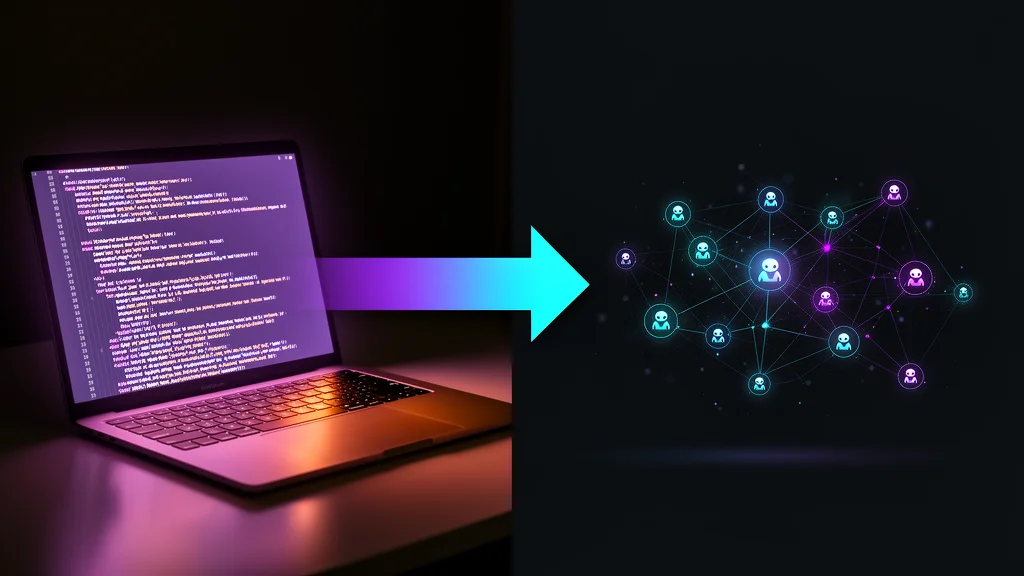
Andrej Karpathy coined the term. Lovable made it mainstream. And in February 2026, Lovable crossed $400 million in annual revenue — proving that millions of people want to build software by simply describing it.
But here's the twist: even Karpathy has moved on. In March 2026, on the No Priors podcast, the man who gave us "vibe coding" declared it passé. His new term: agentic engineering. He hasn't typed a line of code since December — agents write 98% of it. The game shifted from "prompt and hope" to orchestrating autonomous agents that build, test, and ship.
The vibe-coding revolution is real. You can go from idea to deployed app in 20 minutes. React frontend, Supabase backend, custom domain, live on the internet. It feels like magic.
But then what?
The Post-Deploy Gap
Here's what happens after the euphoria fades:
Day 1: You deploy. You share it on Twitter. You get 47 likes and 3 signups.
Day 3: You check Google Analytics. Four visitors yesterday. Two were you.
Day 7: The excitement is gone. The app works perfectly. Nobody uses it.
This isn't a failure of the app. It's a failure of everything around the app. You have a product with zero distribution. No SEO presence. No content. No social proof. No growth engine.
Lovable gave you the car. You forgot to build the road.
Why This Gap Exists
Vibe-coding tools are brilliant at one thing: turning ideas into working software. But they're intentionally scoped to building. They don't:
- Audit your site for SEO issues
- Write blog posts targeting keywords your audience searches
- Find Reddit threads where someone asks for exactly what you built
- Set up analytics and send you weekly performance reports
- Build an email list and send newsletters
- Generate social media content from your product updates
These aren't features Lovable forgot. They're an entirely different category of work. Building is a burst. Growing is a marathon. You need different tools — or better yet, different agents.
Step 2: The AI Workforce
What if the same AI that built your app could also grow your business?
Not as a chatbot you prompt every time. As an autonomous workforce that runs on schedules, connects to real tools, and produces real deliverables — while you sleep.
This is what we're building at TeamDay. And the architecture is surprisingly simple: it's the same Claude that powers vibe-coding, but running on a server with access to business tools.
Here's what it looks like in practice
Monday 6am: Your SEO agent runs a weekly audit. It pulls data from Ahrefs and Google Search Console, identifies that you're ranking #11 for a keyword with 2,400 monthly searches, and generates a content brief to push you to page 1.
Monday 8am: Your Content agent picks up the brief and writes a 2,000-word blog post optimized for that keyword. It matches your brand voice because it has read your entire site.
Tuesday: Your Social Media agent finds 3 Reddit threads and 2 Hacker News discussions where someone is asking for a solution your product provides. It drafts authentic, helpful responses — not spam, but genuine engagement.
Wednesday: Your Newsletter agent compiles the week's best content into a digest and sends it to your growing subscriber list.
Friday: Your Data Analyst generates a weekly report: traffic up 12%, two new keywords in top 10, newsletter open rate at 34%, best-performing social post identified.
You didn't prompt any of this. You slept through most of it.
The Compound Effect
Here's what most people miss about growth: it compounds.
Week 1: Your SEO agent audits the site. Finds 5 content gaps.
Week 4: You have 5 blog posts. Google starts indexing them.
Week 8: Three posts rank in top 20. Social engagement brings backlinks.
Week 12: Organic traffic is growing 15% week-over-week. Newsletter has 200 subscribers.
Week 20: Your vibe-coded app has a real audience. Revenue starts.
None of this is magic. It's the same playbook every successful startup follows. The difference is that AI agents execute it at a fraction of the cost, with perfect consistency, 24 hours a day.
The Stack: Build + Grow
The modern indie builder's stack is splitting into two clear layers:
| Layer | Purpose | Tools |
|---|---|---|
| Build | Turn ideas into working apps | Lovable, Bolt, Replit, Cursor, v0 |
| Grow | Turn apps into businesses | AI agents for SEO, content, social, analytics, email |
The build layer is solved. Lovable proved it at $400M ARR. The grow layer is the frontier.
Think about it: the hardest part of building a SaaS used to be... building it. Now the hardest part is getting anyone to notice it exists. The bottleneck shifted, and the tools need to shift with it.
What This Means for Builders
If you're vibe-coding apps, you're already ahead of 99% of people. You can go from idea to product in an afternoon. That's an incredible superpower.
But don't stop at Step 1. Every app you deploy deserves a growth engine behind it. The question isn't whether to do SEO, content marketing, and social — it's whether you do it manually (slow, inconsistent) or let AI agents handle it (fast, autonomous, compounding).
Karpathy's shift tells the same story from the engineering side. Vibe coding was step 1 — the breakthrough that let everyone build. Agentic engineering is step 2 — the discipline that makes what you build actually work at scale. The same agents that write your code can run your SEO, publish your content, and monitor your analytics.
The builders who figure out Step 2 will be the ones who actually make money from their vibe-coded apps. The rest will have a portfolio of beautiful products that nobody uses.
Getting Started
The path from "deployed" to "growing" is shorter than you think:
-
Connect your tools. Link your GitHub repo, add your site URL to an analytics platform, connect Ahrefs or Search Console if you have them.
-
Activate the right offices. Not every app needs every agent. A B2B SaaS needs SEO + content + email. A consumer app needs social + video + analytics. Pick what fits.
-
Set your missions. Define what runs automatically: weekly reports, daily scans, content schedules. The agents handle execution.
-
Review and refine. Check in weekly. The AI does the work; you set the direction.
The app is built. The hard part is over. Now let's grow it.
TeamDay runs autonomous AI agents in the cloud — SEO, content, social media, analytics, and more. Start growing your vibe-coded app or see how it works with Lovable.